
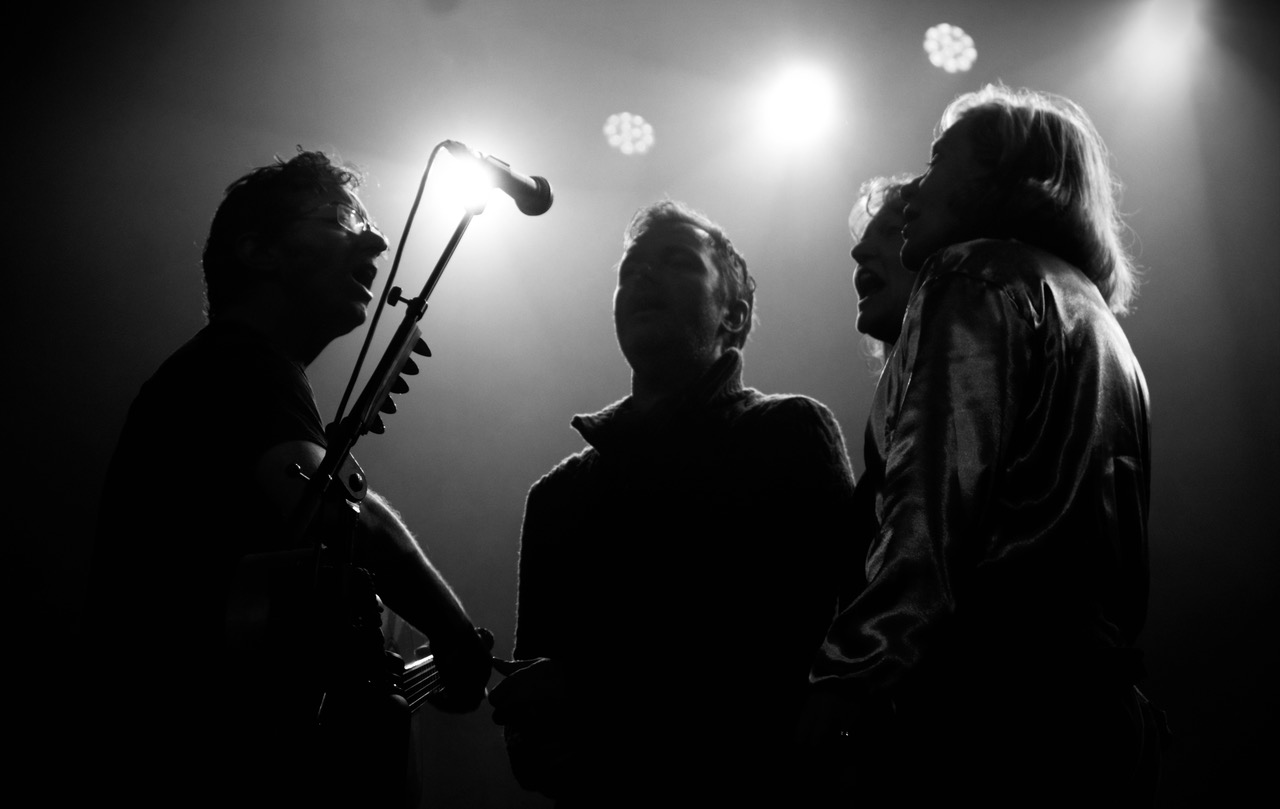
This Is How We Fly (Caoimhín Ó Raghallaigh – hardanger d’amore, Seán Mac Erlaine – clarinet & electronics, Nic Gareiss – percussive dance, Petter Berndalen – drums) have been making waves for over sixteen years now. Mixing percussive dance, electronics, and traditional Irish instruments has allowed this experimental ensemble to hone their unique sound into something special. This internationally acclaimed quartet brings together a visionary Irish fiddler, an inventive Appalachian hard-shoe dancer, a genre-defying Dublin improviser, and a lyrical Swedish percussionist. Together, they create a richly textured sound where traditional music, rhythm, improvisation, and contemporary influences meet in bold and unexpected ways. Described by The Irish Times as “traditional music shot through with the adrenaline of contemporary influences”, Elysia from our Box Office and Marketing Team sat down with Seán Mac Erlaine to find out how this tantalising foursome manages to balance traditionalism and modernism in their music.
3 Words to describe your music?
Joyous, exploratory, open-ended.
How did TIHWF form in 2010?
It was a commission where Caoimhín was asked to organise for Dublin Fringe in 2010, and he was the only one who knew each of us– we all knew Caoimhín but none of us knew each other, so he put us together. We had our rehearsal or two and found it was just a lot of fun, but it was unusual because of the strange instrumentation. Caoimhín on the fiddle, me playing the clarinet, a Swedish percussionist, and an American percussive dancer. The gig went really great in 2010, and we just decided to keep it going as we worked so well together and had genuine fun. We haven’t looked back since.
What has changed most as a touring band in the last 16 years?
I think what has changed most would be that children have entered the fray. I know that’s not a musical answer but in terms of our lives that’s pretty significant obviously, but my daughter was born a few months before we got together first, and now we have four more children in the group, so that has real logistical challenges. Even before the kids arrived it was already difficult enough trying to organise between three different countries, but in general, I’d say not much has changed. Once we’re together and we’re on the road we’re still diving into the same well, which is really about the four of us musicians, each of us have our own backgrounds and influences and we have to find a way to communicate and talk to each other on stage, through music. Our process is an endless one; as long as we’re still breathing, we’ll play. It’s bottomless. Relationships change, and outside influences too like having children happen, and all of that happening will in some way inform the music, because the music is very responsive. It responds to how we are on stage in the moment, and how the audience is within the room. There’s a lot of improvisation in the music as well as a result.
Do you all have “regular” 9-5 jobs, or is This Is How We Fly your full-time job now for each of you?
No, this is all of our full-time jobs now!
Best/favourite venue you’ve ever played?
That’s hard, there’s so many lovely memories. All those venues are tied to the people who run them, the audiences we meet too. One that pops into my head with your question is a vineyard in rural Austria, which we played in I think 2017. We’re playing there again actually the night before Triskel, they asked us to come back, so that’s definitely in my mind because we’ll be going from rural Austria back to the bottom of Ireland. Bit of a culture shock! But you can imagine, a vineyard in Austria is a bit different. Those differences though, like the venue, I think they generate impetus that affects how we play on the night because we’re like, “wow, we’re in a vineyard”, “wow we’re in Cork”, all of that feeds directly into the performance.
Biggest difference between crowds in Ireland vs the US or Europe?
I think there’s actually bigger differences in the types of crowds that come to our shows rather than from country-to-country. We get an audience which is mixed- some who are very interested in trad or folk music, and the sound of the group is deeply embedded in that, but we also have people who are much more interested in the electronic stuff, which we also try to speak to that world. It’s a cross-section of interested listeners usually!
You primarily compose and create your own music and compositions to perform. Can you share some of your inspirations as a band?
Not really, there’s no one we look to collectively and say, “that’s really cool what they did and we want to do something like that”. I’d say the influences more often than not would be not musical, they might be something like… Food. Food is actually a really big thing with the band, even like the production of food like growing food and sustainability. I’d say that influences us more than a new record we’ve listened to. For instance Petter our percussionist, he had a personal project where he’d only eat food he could get directly from the person who grew or harvested it, and we’d have audiences even in Cork come to us with their cauliflowers and bits. I know it sounds a bit strange and it’s not musical per se, but we believe everything can be expressed as music. Those kind of things to us are more interesting. That’s why we don’t rehearse; as Petter said once during an interview, you don’t rehearse to talk to your friends!
Plans for 2026/27?
We are working on a third album at the moment. Aside from that, we have a gig coming up in Portlaoise as well. All of our dates are quite close together because it’s quite hard to get Nic over from Michigan every month, so it’s better to do it over a few days we find.
Cats or dogs?
I’d be a dog person, Caoimhín has absolutely no time for the mere concept of pets. Nic likes my dog so I’m sure he’d say dogs, and Petter owns two cats!